
Enoshima has a reputation.
It’s marketed as an easy island stroll. Shrines, seafood, sea breeze. Very approachable. Very “nice half-day trip.”
And that’s true—until you keep walking.
Because once you reach the far edge of the island, where the land narrows and the cliffs face the open sea, Enoshima shifts. The crowds thin out. The paths get rougher. The wind gets louder. And suddenly, you’re standing in front of the Iwaya Caves, realizing this island has been holding back.
The Iwaya Caves aren’t just another attraction. They’re the moment Enoshima stops being cute and starts being ancient, dramatic, and a little intense—in the best possible way.

You might want to read:
What the Iwaya Caves Really Are (And Why They Matter)
The Iwaya Caves are natural sea caves formed over hundreds of years by relentless wave erosion against Enoshima’s rocky cliffs. This isn’t a man-made tunnel or a staged experience—it’s geology doing what it does best, slowly and violently shaping land.
Historically, these caves weren’t visited for fun. They were places of religious devotion and ascetic practice. Monks, pilgrims, and spiritual practitioners believed the caves were sacred, closely tied to Benzaiten, Enoshima’s most important deity associated with water, music, fortune, and wisdom.
That history explains why the caves don’t feel like a theme park attraction. The space is intentionally preserved with minimal interference. The lighting is low. The walkways are narrow. The mood is quiet. You’re meant to experience the caves—not breeze through them.
There are two main cave sections, often called the First Cave and Second Cave. The first feels deeper and more primal, with tighter passageways and heavier atmosphere. The second opens up slightly and includes more religious elements, reminding you that this place once functioned as a spiritual destination, not a sightseeing stop.
Why Taking the Ferry From Bentenmaru Pier Changes Everything
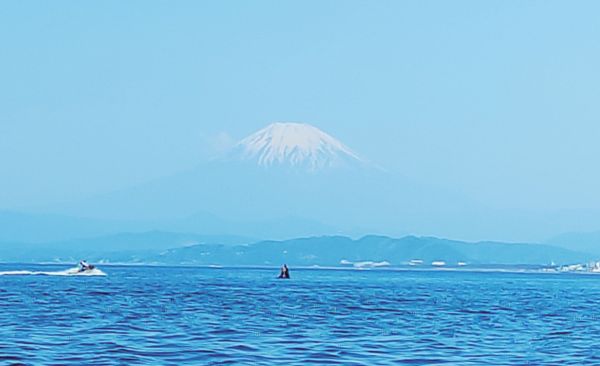
You can reach the Iwaya Caves on foot, but taking the ferry from Bentenmaru Pier fundamentally changes how the experience unfolds.
The ferry ride is short, but it reframes Enoshima completely. From the water, the island looks less like a tourist destination and more like a rugged outcrop battling the sea. The cliffs are sharper. The waves feel louder. You understand why people once viewed this place as powerful—and maybe even dangerous.
And then there’s the Mt. Fuji factor.
On a clear day, the ferry route offers one of those quietly spectacular moments where Mt. Fuji appears on the horizon, distant and understated. It’s not framed. It’s not announced. It just… exists. If you catch it, it feels like a reward for choosing patience over convenience.
Even when Mt. Fuji doesn’t show up, the ferry ride sets the tone. You arrive at the caves already tuned into the island’s wilder energy.
Entering the Iwaya Caves: When the Island Goes Quiet

The moment you step inside the Iwaya Caves, Enoshima’s noise disappears.
Sunlight fades. The temperature drops slightly. The sound of waves becomes muffled and echoing. Your footsteps suddenly feel louder than expected.
Inside, the path is clearly marked but intentionally uneven, reminding you that this is a natural space first and a visitor attraction second. In some sections, ceilings dip low enough that you instinctively duck. In others, the cave opens just enough to let you breathe again.
Lighting is kept dim, sometimes supplemented by small handheld lights, which adds to the sense that you’re exploring rather than observing. This isn’t about perfect photos. It’s about texture, sound, and atmosphere.
Most people move slower here—not because they’re told to, but because the space demands it.
The Spiritual Layer You Feel Even If You’re Not Looking for It
Even if you don’t arrive interested in history or spirituality, the caves quietly introduce you to Enoshima’s religious past.
Shrine elements, carved figures, and symbolic markers appear throughout the caves, subtle but intentional. These aren’t decorative add-ons—they’re reminders that people once came here seeking guidance, protection, and insight.
There’s something grounding about that knowledge. You’re walking where people once stood with very different intentions, yet the space still holds meaning.
It adds weight to the experience without making it heavy.
The Exit That Turns the Visit Into a Journey
Leaving the caves isn’t the end—it’s the transition.
Instead of heading back the same way, you continue forward and begin the long stair climb back up through Enoshima Island. This climb is often underestimated, but it’s a crucial part of the experience.
The stairs wind upward through shaded paths, cliffside viewpoints, and forested sections. You’ll stop to catch your breath—and when you do, you’re rewarded with sweeping ocean views that feel earned, not handed to you.
This climb creates a sense of completion. You went down into the island. Now you’re coming back up.
By the time you reach the main area of Enoshima again, everything feels brighter, louder, and more alive—almost like re-entering a different world.
How to Fit the Iwaya Caves Into Your Enoshima Day
The Iwaya Caves are best treated as a centerpiece, not a side stop.
They work beautifully when placed after you’ve explored the island’s lighter attractions. By the time you reach the caves, you’re ready for something deeper, quieter, and more immersive.
Afterward, the climb back up naturally leads you toward food, cafés, and slower wandering—making the day feel balanced rather than exhausting.
Why Iwaya Caves Enoshima Work So Well in an Enoshima Itinerary
The caves add contrast.
After shrines, cafés, souvenir streets, and coastal paths, Iwaya Caves Enoshima shift the energy. They slow you down. They ground you. They remind you this island wasn’t built for visitors — it existed long before them.
That contrast is what makes the memory stick.
Enoshima without the caves feels pleasant.
Enoshima with the caves feels complete.
Before You Go: What to Know About Iwaya Caves Enoshima

This is the part most guides rush — so we won’t.
Visiting Iwaya Caves Enoshima is easy, but knowing what to expect makes the experience smoother, safer, and way more enjoyable.
Entrance Fee and Tickets
The Iwaya Caves Enoshima entrance fee is affordable and straightforward. You pay on-site before entering the caves.
Cash is recommended, especially during busy days when card systems can slow things down. There’s no time limit once inside, which means you’re free to explore at your own pace — a big win for anyone who hates being rushed through atmospheric places.
Ferry vs Walking: Which Should You Choose?
If the Bentenmaru ferry is operating, take it.
Not because walking is bad — but because the ferry adds a narrative arc to the experience. You arrive by sea, explore underground, then climb back through the island. It turns the visit into a loop instead of a straight line.
That said:
- The ferry may stop during rough seas or bad weather
- If it’s not running, walking is still completely doable
Just know that walking both ways can feel long, especially after the cave visit and stair climb.
What to Wear (This Matters More Than You Think)
The Iwaya Caves are naturally damp. The paths inside can be slick, and the stair climb afterward isn’t gentle.
Wear:
- Closed shoes with good grip
- Something light but breathable
- Layers if visiting outside summer
Avoid:
- Slippery sandals
- Shoes you don’t want near seawater
- Anything too rigid or heavy
This is not a fashion stop — it’s a movement stop.
Best Time to Visit Iwaya Caves Enoshima
Timing changes the entire experience.
The best time to visit Iwaya Caves Enoshima is:
- Late morning to early afternoon
- On clear days (for Mt. Fuji visibility)
- On weekdays if possible
Earlier visits mean:
- Fewer people inside the caves
- Better light outside before entering
- Less congestion on the stairs afterward
Sunset is beautiful, but be mindful of closing times and ferry schedules.
How Long to Allocate for the Full Experience
People underestimate this — and then rush.
For a complete Iwaya Caves Enoshima experience, plan:
- 15–20 minutes for the ferry (including waiting)
- 30–45 minutes inside the caves
- 30-45 minutes for the stair climb and scenic stops
That’s roughly 2 to 2.5 hours, not counting food or wandering before and after.
It’s not a quick stop — and that’s the point.
Wrap Up: Why the Iwaya Caves Feel So Memorable
The Iwaya Caves don’t rely on spectacle. They don’t rush you. They don’t explain themselves too much.
Instead, they let Enoshima speak through rock, water, and silence.
Between the ferry ride, the possibility of seeing Mt. Fuji, the atmospheric caves, and the stair climb back into daylight, this experience feels layered and physical in a way most island visits aren’t.
You don’t just see the Iwaya Caves.
You move through them.
You feel them.
And once you’ve been there, Enoshima stops being “just a nice island” and starts feeling like a place with a much deeper story.


